
AI Property Investment Software Pricing: What to Expect
AI property investment software pricing explained: pricing models, hidden costs, and what to compare before you subscribe. Read the buyer's guide.
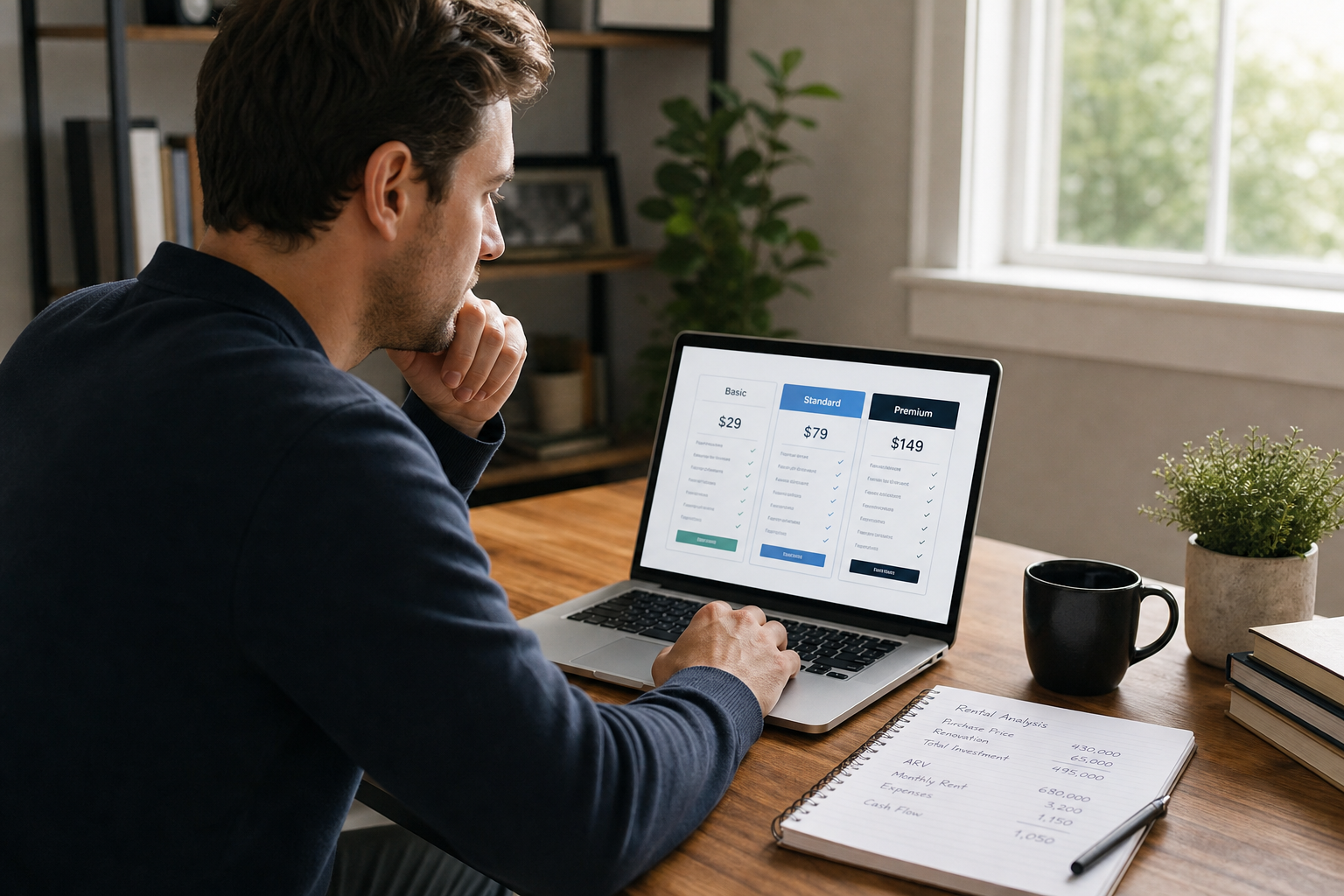
AI property investment software pricing is the cost structure behind tools that use artificial intelligence to find comps, calculate value, and build offers. Prices differ by vendor, so the smart move is to compare cost per analysis, not just the monthly fee. This guide shows how the pricing models work and what to check before you subscribe.
Quick answer: Most tools charge a subscription, a per-report fee, or a credit bundle. Because plans and prices change often, always confirm current rates on the vendor's site, then divide by the reports you will actually run.
What Is AI Property Investment Software Pricing?
It is the way vendors charge for AI deal-analysis tools. These tools pull comparable sales, calculate After Repair Value (ARV, the expected value after renovations), estimate repairs, and suggest offers.
Because the work is automated, the price should be judged against the time saved. Manual comping often takes 20 to 30 minutes per property. A tool like ChatARV delivers the same analysis in about 60 seconds.
Common Pricing Models for Investor Software
Most vendors fall into one of three models. Each fits a different investing style.
| Model | Best for | Watch out for |
|---|---|---|
| Monthly or annual subscription | Weekly or daily deal analysis | Report caps and tier limits |
| Pay per report | Occasional investors | Costs climb quickly with volume |
| Credit bundles | Seasonal or variable volume | Expiring credits |
What Affects the Cost of Comping Tools
Several factors move the price. Therefore, compare features line by line instead of trusting a headline number.
- Data coverage, including MLS-sourced transactions.
- Support for non-disclosure states, where sale prices are not public.
- Repair estimates and adjustable scopes.
- Exit-strategy outputs such as wholesale, novation, flip, hold, and BRRRR.
- Report sharing, integrations, and API access.
Hidden Costs to Check Before You Subscribe
The sticker price is rarely the full story. For example, a cheap plan may cap reports, charge extra for API calls, or require separate MLS access.
In addition, a tool that returns weak comps can cost far more than it saves. Pulling the wrong comps means you either overpay and shrink your margin or lowball and lose the deal.
An investor weighs AI property investment software pricing against monthly deal volume.
How to Compare Software Costs Step by Step
- Estimate your monthly deal volume, including deals you reject.
- List the features you must have, such as non-disclosure coverage or repair estimates.
- Check what each plan includes and where limits apply.
- Divide the monthly price by realistic report volume to get cost per analysis.
- Test each tool on the same live addresses before committing.
Judging Value: Speed, Accuracy, and Return
Price only matters next to results. In wholesaling, the investor who gives the seller a confident number first usually wins the contract.
One ChatARV user, Chris Turney of Fortis Valorem, updated a repair scope after discovering a full gut. The report recalculated instantly, and he used it to renegotiate and land a $35,000 assignment fee. That is a single deal, not a guarantee, but it shows how speed can outweigh subscription cost.
To understand how the valuation itself works, read how AI real estate valuation works and AI comps explained.
Where ChatARV Fits in Your Software Budget
ChatARV is built for wholesalers and investors at all experience levels. Enter an address and it reviews hundreds of properties, surfaces the top six comps, adjusts for size, beds, baths, lot, and condition, and produces ARV, as-is value, repair estimates, and offers for every exit strategy.
It also supports all 12 non-disclosure states, offers rate-limited API access, and connects to Gmail for sending offer letters. For current plan details, visit the ChatARV site. You can also see a broader comparison in this comping software guide for investors.

Fast, defensible numbers help investors make offers on the same call.
Helpful Outside Resources
For background on valuation concepts, see the After Repair Value overview on Wikipedia. For consumer guidance on subscription terms, the Federal Trade Commission publishes advice on recurring charges. Furthermore, check your state's wholesaling rules with a local attorney.
Frequently Asked Questions
What is AI property investment software pricing?
It is the cost structure of tools that use AI to find comps, calculate ARV, and build offers. It usually takes the form of a subscription, a per-report fee, or a credit bundle.
How much does AI comping software usually cost?
Prices vary widely by vendor and plan, so check each vendor's current pricing page. Compare the cost per analysis rather than the headline monthly price.
Is a subscription or pay-per-report model cheaper?
Pay-per-report is often cheaper for low volume, while subscriptions usually win once you analyze deals every week. Calculate your own monthly volume to decide.
Are there hidden costs in deal-analysis software?
Yes, they can exist. Watch for report caps, extra fees for API access, charges per user, and separate MLS data costs.
Do I need my own MLS access to use AI comping tools?
Not necessarily. Some tools, including ChatARV, pull MLS-sourced transaction data for you, so separate MLS access is not required.
Does pricing change for non-disclosure states?
It can. Some tools limit or exclude non-disclosure states, so confirm coverage before you pay. ChatARV supports all 12 non-disclosure states.
Is free comping software accurate enough?
Free tools can work for rough estimates. However, they often lack condition adjustments, repair estimates, and defensible reports, which matter when you make offers.
How do I calculate the return on investment of a comping tool?
Compare the subscription cost to the time saved and the deals won or protected. A single avoided overpayment or one extra assignment fee can exceed a year of fees.
What features justify a higher price?
Look for transparent adjustments, repair estimating, multi-exit-strategy offers, shareable reports, and broad data coverage. Features that save time on live seller calls are worth the most.
Can I test a tool before paying?
Many vendors offer trials or free credits, but terms change. Check the vendor's website, then run the same live addresses through each tool.
What is the biggest mistake when comparing software prices?
The biggest mistake is choosing on monthly price alone. Accuracy, speed, coverage, and report limits drive the real cost per deal.
Should beginners and experienced investors pick different plans?
Often yes. Beginners can start with lower volume and grow, while high-volume wholesalers benefit from plans with more reports and API access.
Conclusion
AI property investment software pricing makes sense only when you measure it against cost per analysis, accuracy, speed, and coverage. Estimate your volume, check for limits and hidden fees, and test tools on real addresses. Then choose the plan that helps you give sellers a confident number first.
