
AI Wholesale Real Estate Tools: What They Do and Why
AI wholesale real estate tools find comps, calculate ARV, and build offers in about a minute. Learn what to look for and how to choose the right one.

AI wholesale real estate tools are software platforms that use artificial intelligence to find comparable sales, calculate After Repair Value (ARV), estimate repairs, and produce an offer number for wholesalers. In a business where the first investor to give a confident number often wins the contract, that speed matters. This guide explains what these tools do, how to judge them, and where they fall short.
Quick answer: The best AI tools turn a property address into a comp-backed ARV, a repair estimate, and a maximum allowable offer in about a minute. You still need to review the comps and adjustments before you trust the number.
What Are AI Wholesale Real Estate Tools?
They are deal-analysis platforms built to answer one question: what should I offer? Instead of searching listings and building spreadsheets, you enter an address. The software selects comps, applies adjustments, and returns values and offers.
In addition, many tools model several exit strategies. These include wholesale, fix-and-flip, buy-and-hold, and BRRRR (buy, rehab, rent, refinance, repeat). As a result, one analysis can guide several decisions.
Why Manual Comping Slows Wholesalers Down
Manual comping typically takes 20 to 30 minutes per property. It also varies by person. Two investors can pull different comps and reach different ARVs.
Consequently, the risks run both ways. Pull weak comps and you may overpay and shrink your margin. Alternatively, you may lowball and lose the deal to a faster competitor. For more on this, see how wholesalers underwrite deals faster with AI.
An investor reviews comps and offer numbers produced by AI wholesale real estate tools.
What Features Should AI Deal-Analysis Software Have?
Not every platform is built for investors. Some are agent tools with investor features added later. Look for these core capabilities.
- Smart comp selection: ranking by proximity, recency, and condition.
- Automatic adjustments: square footage, beds, baths, lot size, and condition.
- Transparent reports: every comp and adjustment visible, so you can defend the number.
- Editable inputs: toggle comps, swap them, add custom comps, and change repairs.
- Exit-strategy math: MAO, flip profit, rental cash flow, and BRRRR projections.
- Data coverage: including non-disclosure states.
For a broader comparison, read this overview of software wholesalers use to analyze deals.
How to Analyze a Deal With an AI Tool
The workflow is short. Follow these steps for each property.
- Enter the property address and confirm the basic details.
- Review the comps the AI selected, and toggle or swap any that do not fit.
- Set the repair scope using photos, seller notes, or a walkthrough.
- Check the ARV range and as-is value against your market knowledge.
- Choose an exit strategy, set your assignment fee, and read the MAO.
- Share the report with the seller, cash buyers, or partners.
If ARV is your main bottleneck, this guide covers the fastest way to calculate ARV on a wholesale deal.
Comps in Non-Disclosure States
In non-disclosure states, sale prices are not part of the public record. Investors there have often had to guess. Tools that draw on MLS-sourced transaction data can close that gap. Notably, you do not need your own MLS access when the platform supplies the data.
Where chatarv.ai Fits Among AI Wholesale Real Estate Tools
chatarv.ai is built for wholesalers and investors. You enter an address, and in about 60 seconds it reviews hundreds of properties, surfaces the top six comps, and calculates ARV and as-is value. It also estimates repairs and returns offers for wholesale, novation, fix-and-flip, buy-and-hold, and BRRRR.
Users can update the repair scope and recalculate instantly. One daily user, Chris Turney of Fortis Valorem, reported updating a report after finding a property needed a full gut. The recalculation helped him renegotiate and land a $35,000 assignment fee. The platform also supports all 12 non-disclosure states, shareable comp reports, a Gmail integration for offer letters, and rate-limited API access. It reports more than 20,000 active users across the U.S.
For a ranked view of the market, see these best tools for real estate wholesalers.
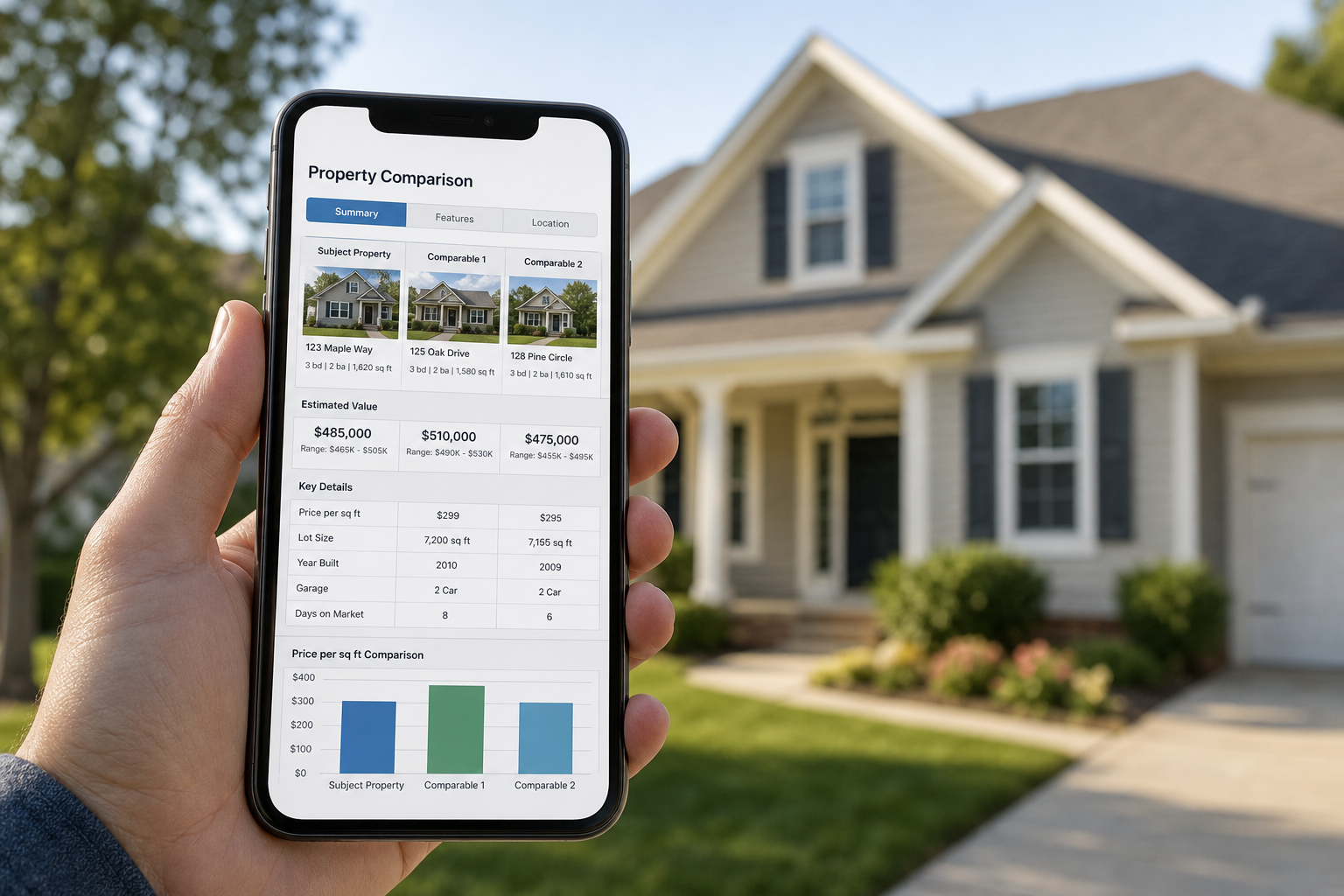
A mobile comp report lets a wholesaler discuss an offer on the same call.
Limits to Keep in Mind
AI speeds up the work, but it does not replace judgment. Photos may not show foundation problems. Unusual properties may lack true comps. Therefore, review the comps, test the repair estimate, and confirm with a walkthrough when possible.
Also check local rules. Wholesaling regulations differ by state, so review your state's real estate licensing guidance. The U.S. Department of Housing and Urban Development offers general housing resources, and the Wikipedia overview of real estate wholesaling explains the basic model.
Frequently Asked Questions
What are AI wholesale real estate tools?
AI wholesale real estate tools are software platforms that automate comping, ARV calculation, repair estimates, and offer math for wholesalers. They replace much of the manual research behind each deal.
How do AI tools choose comps?
They scan nearby sales and rank them by proximity, recency, and condition. The best tools then adjust each comp for size, bedrooms, bathrooms, and lot size.
Are AI comps accurate enough to make an offer?
They are a strong starting point, but you should still review the comps and adjustments. Local knowledge and a property walkthrough remain important.
What is ARV in wholesaling?
ARV, or After Repair Value, is the estimated price a property would sell for after renovations. Wholesalers use it to work backward to a maximum offer.
How is the maximum allowable offer calculated?
A common wholesale formula is ARV times a target percentage, minus repairs and your assignment fee. The percentage varies by market and buyer.
Can AI tools run comps in non-disclosure states?
Some can. In non-disclosure states, sale prices are not public record, so tools need access to MLS-sourced transaction data to see them.
How long does an AI deal analysis take?
Some platforms return a full analysis in about 60 seconds. Manual comping often takes 20 to 30 minutes.
Do I need MLS access to use these tools?
Not always. Some platforms pull MLS-sourced data for you, so you do not need your own MLS membership.
Can I change the repair costs after a walkthrough?
Yes, in tools that support it. Updating the repair scope should recalculate the offer so you can renegotiate with current numbers.
Which exit strategies do AI wholesale real estate tools support?
Investor-focused tools typically cover wholesale, fix-and-flip, buy-and-hold, and BRRRR. Some also model novation and creative-finance structures.
What is the biggest mistake when using AI comps?
Accepting the number without reviewing the comps is the most common mistake. Always confirm the comps are truly similar and recent.
How much do AI wholesale real estate tools cost?
Pricing varies by provider and plan, so check each vendor's current pricing page. Compare cost against the time saved and deals protected.
Can beginners use AI deal-analysis software?
Yes. Clear reports that show every comp and adjustment can help new investors learn how a number is built.
Conclusion
AI wholesale real estate tools cut deal analysis from 20 to 30 minutes to about a minute, while making valuations more consistent. Choose a tool with transparent comps, editable repairs, multi-exit math, and strong data coverage. Then verify the output before you make an offer. To see how this works on a real address, try chatarv.ai.
