
Buy and Hold Investment Analysis: A Complete Guide
Master buy and hold investment analysis with our step-by-step guide to cash flow, cap rate, and ROI — then see how ChatARV automates the numbers.

Buy and hold investment analysis is the process real estate investors use to decide whether a rental property will generate steady cash flow and long-term returns before they ever sign a contract. In practice, it means pulling solid comps, estimating repairs, projecting rent, and running a handful of key numbers to see if the deal actually works. For wholesalers and investors alike, getting this analysis right, and fast, is often the difference between landing a contract and watching a competitor get there first.
Quick answer: A buy and hold investment analysis compares a property's purchase price and financing costs against its expected rental income, operating expenses, cap rate, and cash-on-cash return. If the resulting cash flow and return metrics meet your targets, the property is a candidate to hold long term rather than flip or wholesale.
What Is Buy and Hold Investment Analysis?
Buy and hold investment analysis is a structured review of a property's numbers, used to decide whether holding it as a long-term rental will meet an investor's income and growth goals. Unlike a quick gut check, it relies on actual comparable sales, realistic rent estimates, and a full expense breakdown rather than guesswork.
In particular, the analysis answers one core question: after every expense and loan payment, does this property put money in your pocket each month, and does it build equity over time? Consequently, investors who skip this step often discover problems only after closing, when it is far more expensive to fix them.
Because the method draws on the same comparable-sales approach used for calculating After Repair Value, many investors run both analyses side by side before choosing an exit strategy.
Running the numbers before the seller hangs up the phone starts with a clear buy and hold investment analysis.
Why Buy and Hold Property Analysis Matters
Speed and accuracy both matter in this business. On one hand, a slow analysis can cost you the deal entirely; on the other, a rushed, inaccurate one can trap you in a property that bleeds cash every month. As a result, disciplined buy and hold property analysis protects margin on both ends of the transaction.
There is also a long-term tax dimension worth understanding early. For example, the Internal Revenue Service allows residential rental property owners to depreciate the building's value over 27.5 years, a factor that meaningfully affects after-tax cash flow and should be modeled into any serious hold analysis (IRS Publication 527).
Furthermore, because holding periods often run five, ten, or more years, small errors in your initial numbers compound. That is precisely why many investors now lean on platforms such as ChatARV to standardize comps and reduce the inconsistency that comes from manual research.
Key Metrics in a Buy and Hold Investment Analysis
A complete analysis rests on a handful of core metrics. Each one tells a different part of the story, so skipping even one can leave you with a distorted picture of the deal.
Cash Flow
Cash flow is the money left over each month after rent collection, operating expenses, and the mortgage payment. Positive cash flow means the property supports itself; negative cash flow means you are subsidizing it from your own pocket.
Cap Rate
Capitalization rate, or cap rate, measures net operating income against purchase price, expressed as a percentage. It is a useful way to compare properties of different sizes and prices on equal footing (Wikipedia: Capitalization rate).
Cash-on-Cash Return
This metric compares annual pre-tax cash flow to the actual cash you invested, including down payment and closing costs. Because it accounts for financing, it often gives a more realistic picture than cap rate alone for leveraged purchases.
| Metric | What It Shows | Typical Target |
|---|---|---|
| Monthly Cash Flow | Net income after all expenses and debt service | $150-$300+ per door |
| Cap Rate | Return based on price, ignoring financing | 5%-10% |
| Cash-on-Cash Return | Return on actual cash invested | 8%-12% |
Before modeling any of these, investors should also account for carrying expenses during the first months of ownership, which is covered in detail in this guide on calculating holding costs on a flip, many of which apply to buy and hold deals too.
How to Run a Buy and Hold Investment Analysis Step by Step
Although every investor develops their own shortcuts, the underlying process stays consistent. Below is the sequence most reliable analyses follow.
- Pull comparable sales and rental comps. Gather at least six recent, nearby, condition-matched comps so your value and rent numbers reflect the actual submarket.
- Estimate After Repair Value and as-is value. The gap between these two numbers tells you how much rehab budget is realistically justified.
- Build a repair cost estimate. Break costs into categories and add a 10-15% contingency for surprises found during the walkthrough.
- Project rental income and expenses. Include taxes, insurance, management, maintenance reserves, and a vacancy allowance.
- Run the core metrics. Calculate cap rate, cash-on-cash return, and monthly cash flow using your actual financing terms.
- Set your offer and confirm the exit strategy. Work backward from your target return to a Maximum Allowable Offer, then check that buy and hold still beats your backup exit strategy.
Notably, this is the same workflow ChatARV automates end to end, surfacing comps, adjustments, and every exit-strategy calculation in roughly 60 seconds instead of the 20 to 30 minutes manual research typically takes.
Common Mistakes in Rental Property Analysis
Even experienced investors fall into predictable traps. In particular, underestimating repair costs is the most frequent and expensive mistake, since a shallow walkthrough often misses roofing, plumbing, or electrical issues that surface later.
Similarly, ignoring vacancy and maintenance reserves makes a deal look more profitable than it is. A property that cash flows $200 a month on paper can turn negative the moment it sits vacant for even six weeks.
Finally, relying on outdated or mismatched comps skews the entire analysis. Therefore, it pays to understand how modern AI-assisted comping works; this breakdown of AI real estate valuation and why it wins explains how automated comp selection reduces this specific risk.
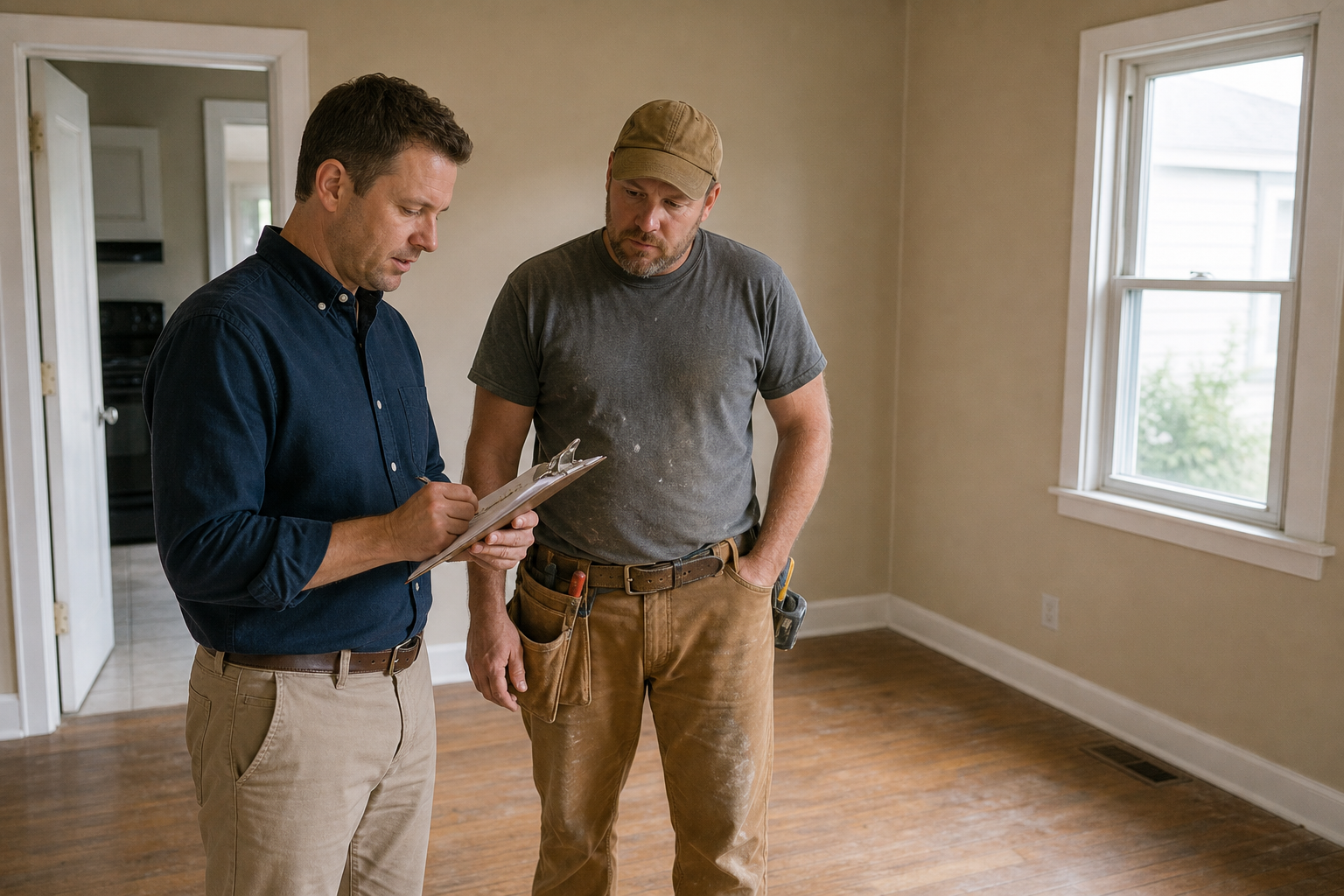
A quick walkthrough with a contractor keeps repair estimates grounded in reality.
How ChatARV Speeds Up Buy and Hold Investment Analysis
ChatARV was built specifically for wholesalers and investors who cannot afford to lose a deal to slow numbers. After entering a property address, the platform reviews hundreds of nearby properties, surfaces the six strongest comps, and adjusts for square footage, bedroom and bathroom count, lot size, and condition automatically.
From there, every report includes a full exit-strategy breakdown, covering wholesale Maximum Allowable Offer, flip profit, buy-and-hold cash flow, and BRRRR projections side by side. As one daily user, Chris Turney of Fortis Valorem, puts it, he is "on it every day" and can "give sellers an offer on the same call."
Because repair scope often changes after a walkthrough, investors can update a report instantly and watch every number recalculate. In one case, discovering a property needed a full gut shifted the analysis to $88,000, which Chris Turney then used to renegotiate and land a $35,000 assignment fee. ChatARV also supports all 12 non-disclosure states, so investors without their own MLS access can still run accurate, defensible comps.
Buy and Hold vs. Other Exit Strategies
Buy and hold is only one path among several, and the right choice depends on your cash position, timeline, and goals. Wholesaling, for instance, trades a smaller assignment fee for speed and no rehab risk, while fix-and-flip targets a lump-sum profit over a few months.
BRRRR sits closer to buy and hold but adds a forced-appreciation and refinance step, letting investors recycle capital into the next deal faster. Novation, meanwhile, offers a middle ground between wholesale and listing when a seller needs repairs completed before sale.
Because these strategies share the same underlying ARV and comp data, running them side by side through one ARV calculator for real estate investors makes it far easier to pick the most profitable exit for each property rather than forcing every deal into one strategy.

Comparing exit strategies side by side helps investors choose the most profitable path for each property.
Frequently Asked Questions About Buy and Hold Investment Analysis
What is buy and hold investment analysis?
Buy and hold investment analysis is the process of evaluating a rental property's purchase price, financing, income, and expenses to determine whether it will produce steady cash flow and long-term appreciation. It typically includes cap rate, cash-on-cash return, and projected rental income.
What is a good cap rate for a buy and hold rental property?
Many investors consider a cap rate between 5% and 10% acceptable, though the right number depends on the market, property class, and risk tolerance. Lower cap rates are common in stable, high-demand metros, while higher cap rates often appear in riskier or slower-growth areas.
How do you calculate cash flow in a buy and hold analysis?
Cash flow equals gross rental income minus operating expenses, vacancy reserves, and debt service. A positive number means the property pays for itself and puts money in your pocket each month after every bill is covered.
How long does a buy and hold investment analysis take?
A manual analysis pulling comps, estimating repairs, and building a spreadsheet can take 20 to 30 minutes per property. AI-based tools like ChatARV can produce a full comp and exit-strategy report in about 60 seconds.
What is the difference between buy and hold and BRRRR?
Buy and hold means purchasing a rental property and holding it long term for cash flow and appreciation without necessarily refinancing. BRRRR adds a forced-appreciation and refinance step so investors can pull capital back out to buy the next property.
What mistakes should investors avoid in rental property analysis?
The most common mistakes are underestimating repair costs, ignoring vacancy and maintenance reserves, and relying on stale or mismatched comps. Skipping a defensible After Repair Value estimate also leads to overpaying and compressed margins.
How much does buy and hold investment analysis cost?
Doing it manually costs only your time, but that time adds up across dozens of properties. Software platforms typically charge a monthly subscription, though the cost is usually offset by faster offers and fewer missed deals.
Why does speed matter in buy and hold investment analysis?
Sellers often accept the first confident, well-supported offer they receive, so slower analysis can cost you the contract. Delivering accurate numbers during the initial call builds trust and keeps competitors from stepping in.
What metrics matter most in a buy and hold investment analysis?
The core metrics are cash flow, cap rate, cash-on-cash return, and total ROI including appreciation and principal paydown. Together they show whether a property meets your income goals and risk tolerance.
Can you run buy and hold investment analysis without MLS access?
Yes, AI-powered platforms like ChatARV pull MLS-sourced transaction data across multiple providers, including in non-disclosure states, so investors can run accurate comps without carrying their own MLS license.
How often should you update a buy and hold investment analysis?
Update your analysis whenever new information changes the numbers, such as after a property walkthrough reveals additional repairs or when rent comps shift. Recalculating quickly protects your margin and gives you leverage to renegotiate if needed.
Final Thoughts
In the end, buy and hold investment analysis comes down to disciplined math, not guesswork. Cash flow, cap rate, and cash-on-cash return each reveal a different piece of whether a rental property deserves a spot in your portfolio, and skipping any one of them invites costly surprises down the road.
As competition for good deals intensifies, investors who combine solid fundamentals with faster tools, such as ChatARV, put themselves in a stronger position to deliver a confident offer before the seller even hangs up the phone.
