
How to Calculate ARV for Real Estate: Step-by-Step
Learn how to calculate ARV using recent comps, repair costs, and the 70% rule. Get an accurate After Repair Value estimate before you make an offer.

How to calculate ARV is one of the first skills every real estate investor needs to master, because a wrong number can quietly turn a promising flip into a loss. ARV, short for After Repair Value, is the price a property should fetch once repairs are finished. It anchors your offer, your repair budget, and your exit strategy, whether that's a wholesale assignment, a fix-and-flip, or a buy-and-hold rental. This guide breaks down the exact formula, the comps you need, and the mistakes that trip up even experienced investors.
Quick answer: To calculate ARV, find three to six recently sold comparable properties within about half a mile and the last three to six months, adjust each one's price for differences in square footage, condition, bedrooms, and lot size, then average the adjusted values. The result is your estimated After Repair Value.
What Is ARV in Real Estate?
ARV is the estimated market value of a property after all planned repairs and renovations are complete. Investors, agents, and appraisers use it to answer one practical question: what will this house be worth once it's fixed up and ready to sell? In contrast, the as-is value reflects the property's current, often distressed condition.
Because ARV represents a future state, it relies heavily on comparable sales, commonly called comps. As a result, the quality of your comps determines the quality of your ARV. Lenders who finance fix-and-flip loans or BRRRR refinances also lean on ARV, which is why accuracy matters beyond just your own offer. For a deeper look at how appraisal methodology works in general, Wikipedia's overview of real estate appraisal is a useful starting point.
Reviewing comps and adjustments is the core of learning how to calculate ARV accurately.
How to Calculate ARV: The Core Formula
At its heart, the ARV formula isn't a single multiplication problem. Instead, it's an averaging process built on adjusted comparable sales. In simple terms: ARV equals the average of your adjusted comp values. However, getting there requires a few deliberate steps, which is where most of the real work happens.
- Pull recent comparable sales. Gather three to six properties that sold within the last three to six months, located within about a half mile of the subject property, in similar condition and size.
- Adjust each comp for differences. Add or subtract value for differences in square footage, bedroom and bathroom count, lot size, and overall condition compared to the subject property after repairs.
- Average the adjusted values. Calculate the average of the adjusted comp prices to produce your estimated After Repair Value, which represents the likely resale price once renovations are complete.
- Estimate repair costs. Walk the property or review photos to build a line-item repair budget covering major systems, cosmetic work, and any code or safety issues that must be addressed.
- Apply your exit-strategy formula. Plug the ARV and repair costs into the formula for your exit strategy, such as the 70% rule for wholesaling or a cash-flow model for buy-and-hold rentals.
For instance, if three adjusted comps come in at $240,000, $255,000, and $248,000, the average, and therefore the ARV, is roughly $247,700. This number is the ceiling you build your offer around, not the number you offer directly. For a dedicated breakdown of this process, ChatARV's ARV calculator built for investors walks through the same logic with live comp data.
Finding the Right Comps for an Accurate ARV Calculation
Comp selection is where most ARV estimates go wrong. Specifically, investors often grab the first few listings they find rather than weighing proximity, recency, and condition together. A comp from eight months ago in a different school zone, for example, can quietly skew your entire average.
In particular, condition matters more than many investors realize. A fully renovated comp sets a useful ceiling, while a comp that still needs work should be adjusted upward before it's averaged in. Similarly, lot size and layout differences deserve their own adjustment line rather than being ignored. Because this weighing process is time-consuming by hand, many investors now use AI tools that review hundreds of nearby sales and surface the best matches automatically, which is covered in more detail in this comparison of AI comps versus manual comping.
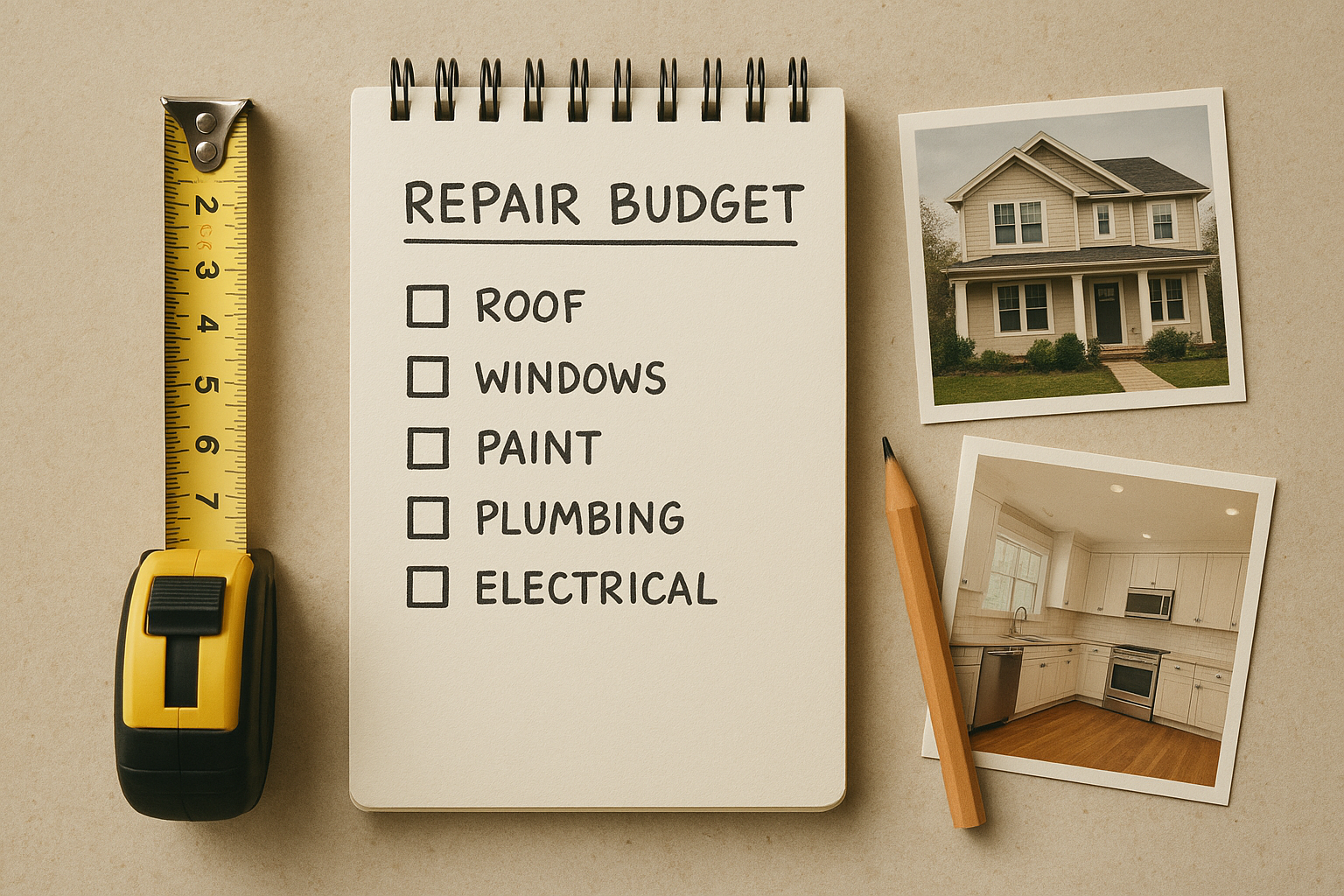
A clear repair budget keeps your ARV calculation grounded in real numbers.
ARV Formula for Wholesalers: Calculating Your Maximum Allowable Offer
Once you know the ARV, wholesalers and flippers typically apply the 70% rule to find a maximum allowable offer, often abbreviated MAO. The formula is: MAO equals 70% of ARV minus repair costs. According to Investopedia's explanation of After Repair Value, this percentage leaves room for holding costs, closing costs, and profit margin.
So, using the earlier example, an ARV of $247,700 with $35,000 in repairs produces a maximum offer near $138,390. That said, the 70% figure isn't fixed. Some investors move closer to 75% in strong markets or drop to 65% when margins are tight. Either way, the formula only works if the underlying ARV is accurate, which is why comp quality matters more than the percentage itself.
Common Mistakes When Estimating ARV
Even experienced investors fall into predictable traps when estimating ARV. Recognizing them ahead of time helps protect your margin on every deal.
- Using stale comps. A sale from a year ago no longer reflects current market pricing, especially in fast-moving areas.
- Skipping condition adjustments. Comparing a renovated comp directly to a distressed property without adjusting overstates value.
- Ignoring repair scope changes. A number found before the walkthrough can be wildly off once hidden damage surfaces.
- Relying on too few comps. A single comp can mislead you; three to six gives a more balanced average.
Notably, repair scope often shifts after the first walkthrough. One ChatARV user, Chris Turney of Fortis Valorem, found a property needed a full gut, updated his repair estimate, and watched the calculation recalculate to $88,000 instantly, which he then used to renegotiate and land a $35,000 assignment fee. This kind of flexibility matters because a static ARV calculated once at the start of a deal rarely survives contact with the actual property condition. For deals financed through a refinance, understanding how lenders view these numbers also connects to broader underwriting questions, including DSCR loan requirements for buy-and-hold investors.
Manual ARV Calculation vs AI-Powered Tools
Manual comping, the traditional approach of digging through listings and spreadsheets, typically takes 20 to 30 minutes per property. That delay matters because speed often decides who gets the contract when a seller is comparing offers. By the time a manually-built ARV is ready, a competing investor may have already called back with a number.
AI-powered platforms shrink that window considerably. ChatARV, for example, reviews hundreds of nearby properties, surfaces the top six comps weighted by proximity, recency, and condition, then automatically adjusts for square footage, bedrooms, bathrooms, lot size, and condition, producing a full ARV report in about 60 seconds. This includes support for all 12 non-disclosure states, where sale prices aren't public and investors have historically had to guess. You can see exactly how that data sourcing works through ChatARV's AI transparency page, and explore the platform directly at chatarv.ai.
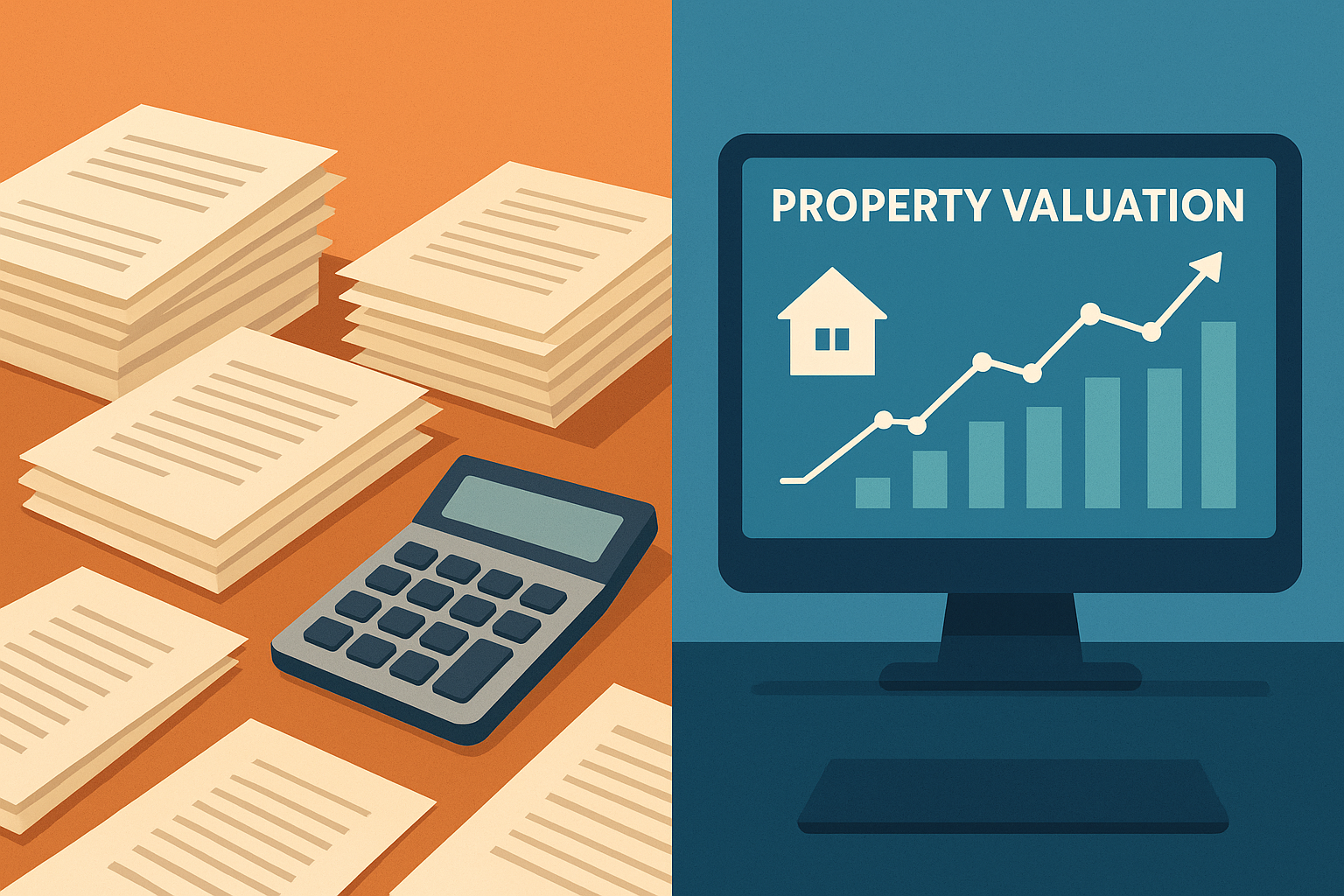
Manual spreadsheets versus AI-generated reports highlight how fast learning how to calculate ARV accurately has become.
More than 20,000 active users across the U.S. now run comps this way, according to ChatARV's internal usage data. As Samira Hassan of Hassan Investment Group puts it, "It's all about time efficiency for me." Whether you calculate ARV manually or lean on software, the underlying formula stays the same, only the speed and consistency change. If you'd like to understand how referral partnerships around tools like this work, ChatARV's affiliate policy explains how recommendations are disclosed.
Frequently Asked Questions
What is ARV in real estate?
ARV, or After Repair Value, is the estimated market value of a property once all planned repairs and renovations are finished. Investors use it to figure out a ceiling for what the finished property could sell for.
How to calculate ARV step by step?
To calculate ARV, pull three to six comparable sales from the last three to six months within a half mile, adjust each for square footage, condition, and features, then average the adjusted prices. That average is your estimated After Repair Value.
What is the difference between ARV and as-is value?
As-is value reflects the property's current condition, repairs and all, while ARV assumes those repairs are already complete. The gap between the two numbers roughly represents the value renovation work can add.
How many comps do you need to calculate ARV accurately?
Most appraisers and investors use three to six comparable sales, though pulling a wider pool and narrowing to the best matches improves accuracy. Fewer than three comps usually produces an unreliable estimate.
What is the 70% rule in real estate investing?
The 70% rule says your maximum offer should equal 70% of the ARV minus estimated repair costs. It's a quick screening formula, not a substitute for a full deal analysis.
Can you calculate ARV without a licensed appraiser?
Yes, investors routinely calculate ARV themselves using comparable sales data from MLS access, public records, or AI-powered platforms. A licensed appraisal is typically only required when a lender needs one for financing.
How do non-disclosure states affect ARV calculations?
In non-disclosure states, sale prices aren't recorded in public records, which makes manual comping much harder. Tools that pull MLS-sourced transaction data can still provide accurate comps even in these markets.
What mistakes most often lower the accuracy of an ARV calculation?
Common mistakes include using stale or distant comps, failing to adjust for condition differences, and ignoring neighborhood price trends. Even one bad comp can shift the average enough to change your offer.
How long does it take to calculate ARV manually versus with AI?
Manual comping typically takes 20 to 30 minutes of digging through listings and spreadsheets. AI-powered tools like ChatARV can produce a full ARV analysis in about 60 seconds.
Is ARV calculated the same way for wholesaling and buy-and-hold deals?
The underlying ARV calculation stays the same, but what you do with the number differs. Wholesalers use it to set a maximum allowable offer, while buy-and-hold investors use it alongside rent projections and cash flow.
How do repair cost estimates factor into the ARV formula?
Repair costs don't change the ARV itself, since ARV assumes the work is complete, but they're essential for calculating your maximum offer. Underestimating repairs is one of the fastest ways to erase a deal's profit margin.
What tools can help calculate ARV quickly?
AI-based comp platforms such as ChatARV pull comparable sales automatically, apply adjustments, and generate a full ARV report in about a minute. This replaces manual spreadsheet work across most deal types.
How often should I recalculate ARV during a deal?
Recalculate ARV any time new information changes the deal, such as after a walkthrough reveals additional repair needs. Updating the numbers quickly can help you renegotiate price or terms before the deal falls through.
Final Thoughts
Ultimately, learning how to calculate ARV comes down to disciplined comp selection, honest adjustments, and realistic repair numbers. Skip any one of those three, and the rest of your deal math, from your maximum offer to your flip profit, inherits that error. Whether you work through comps by hand or rely on a platform that automates the process in under a minute, the goal stays the same: a defensible number you can stand behind when you're talking to a seller. Get that part right, and everything downstream, including your offer, your margin, and your reputation with sellers and buyers, gets easier to defend.
